


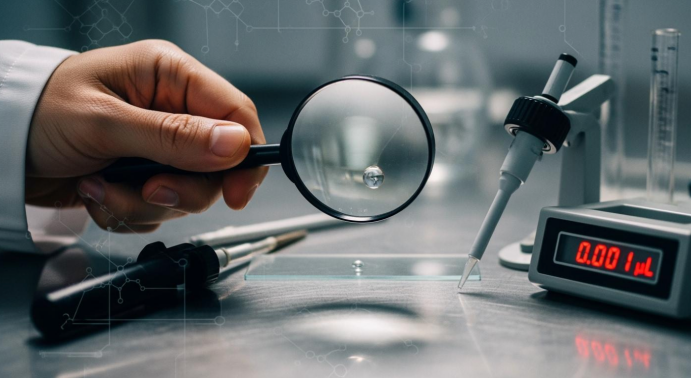
In high-precision manufacturing, precious metal refining, environmental testing, and RoHS compliance, one question defines instrument performance: How low can you detect?The answer lies in Limit of Detection (LOD)—the smallest concentration of an element that can be reliably identified above background noise. For industries chasing ultra-purity and strict regulations, LOD isn’t just a technical term; it’s the line between passing quality control and facing costly failures.
What Is Limit of Detection (LOD)?
LOD represents the lowest concentration level of a target element that an instrument can measure with acceptable statistical confidence.In short: if a value is below the LOD, the instrument cannot reliably confirm the element is present.
Statistically, LOD follows the 3‑Sigma Rule:
LOD = 3 × standard deviation of the background signalThis ensures 99.7% confidence that a detected signal is real, not random noise.
Why LOD Matters Across Industries
Precious Metal RefiningTo produce 99.99% pure gold, silver, or platinum, you must detect tiny trace impurities. Poor LOD means hidden contaminants ruin purity and value.
Environmental & Soil RemediationDetecting heavy metals like lead, cadmium, and arsenic at low levels is critical to meet environmental safety standards.
RoHS & Hazardous Substance ControlElectronics, appliances, and consumer goods must prove restricted substances are below legal limits. Low LOD ensures compliance.
Quartz, Glass & High-Purity MaterialsEven trace iron (Fe₂O₃) or other impurities degrade transparency, strength, and optical performance.
Key Factors That Determine LOD
1. Detector Hardware
The detector is the heart of detection capability.
Si‑PIN detectors: Standard performance, moderate sensitivity.
Silicon Drift Detectors (SDD): Better energy resolution, lower LOD by 3–5 times, enabling far more sensitive trace-element analysis.
2. Counting Statistics & Testing Time
Detection limit improves with measurement time:
LOD is inversely proportional to the square root of test time.Doubling testing time boosts sensitivity by about 30%.But there is a hard limit—the instrument noise floor, usually reached within 60–120 seconds for modern spectrometers. Beyond that, longer testing brings no improvement.
3. Matrix Interference
The sample itself strongly affects LOD:
Light matrix (water, thin films): Easier to detect low levels of lead or other elements.
Heavy matrix (steel, iron alloys): High background noise makes trace detection far more difficult.
Common FAQs Answered
Can XRF detect parts per billion (ppb)?
Typically no.Conventional ED‑XRF achieves detection limits in the low ppm range. For ppb-level analysis, laboratory instruments such as ICP-MS or specialized TXRF are required.
Does longer testing always lower LOD?
No.After reaching the instrument’s inherent noise floor, extending scan time will not improve detection sensitivity.
Final Takeaway
For modern industry, lower LOD = higher purity, better quality, stronger compliance.Whether you’re refining precious metals, controlling raw material purity, or meeting global environmental standards, understanding and optimizing LOD directly reduces risk, waste, and costly rework.



 Sales Line: +86 18660008769
 Email: dongfang@dfaic.com
 Add:No.28 Chuangxin Road, High-tech Zone, Yantai, Shandong


